It doesn’t matter how many wigs they used or how closely the lead actor studied the moonwalk. The new Michael Jackson biopic—despite its budget, its pedigree, and Jackson’s global legacy—fails at the most fundamental task of any biographical film: to reveal the person behind the myth.
Instead, it delivers a hollow echo of a man who revolutionized music, dance, and visual storytelling. This film mistakes spectacle for insight, imitation for understanding, and chronology for narrative. It’s not just disappointing—it’s a betrayal of what a biopic should be.
A Biopic Should Humanize, Not Deify
A great biopic doesn’t just reenact events—it dissects them. It asks: Who was this person when the cameras weren’t rolling? What drove them? What wounded them?
The Michael Jackson movie sidesteps these questions entirely. Jackson is presented as a phenomenon, not a person. We see the red jacket. We hear the squeal. We watch the gloves glisten under stadium lights. But we never get close to the internal life of the man who created “Billie Jean,” “Man in the Mirror,” or “Earth Song.”
Compare this to films like Ray (2004) or Walk the Line (2005). Both spotlighted complex, flawed artists—but they did so with empathy and narrative rigor. We saw Ray Charles’ addiction, his genius, his contradictions. We felt Johnny Cash’s turmoil, love, and redemption.
The Jackson film offers none of that. It’s a wax museum with a soundtrack.
The Danger of Hagiography By avoiding Jackson’s well-documented controversies—his changing appearance, child abuse allegations, estrangement from his family—the film slips into hagiography. This isn’t protection of a legacy. It’s cowardice.
A responsible biopic doesn’t need to pass judgment, but it must acknowledge complexity. When a film pretends the hard questions don’t exist, it loses credibility. Audiences aren’t blind. They know Jackson’s story is layered with pain, power, and paradox. Ignoring that isn’t reverence—it’s evasion.
Performance Mimicry Over Emotional Truth
The lead actor nails the voice. The dance moves are near-perfect. Frame by frame, the recreations of “Thriller,” “Smooth Criminal,” and “Black or White” are technically impressive.
But mimicry is not acting.
Great performance in a biopic isn’t about getting the walk right—it’s about understanding the weight behind the walk. In Capote, Philip Seymour Hoffman didn’t just sound like Truman Capote; he embodied the writer’s loneliness, ambition, and moral compromise.
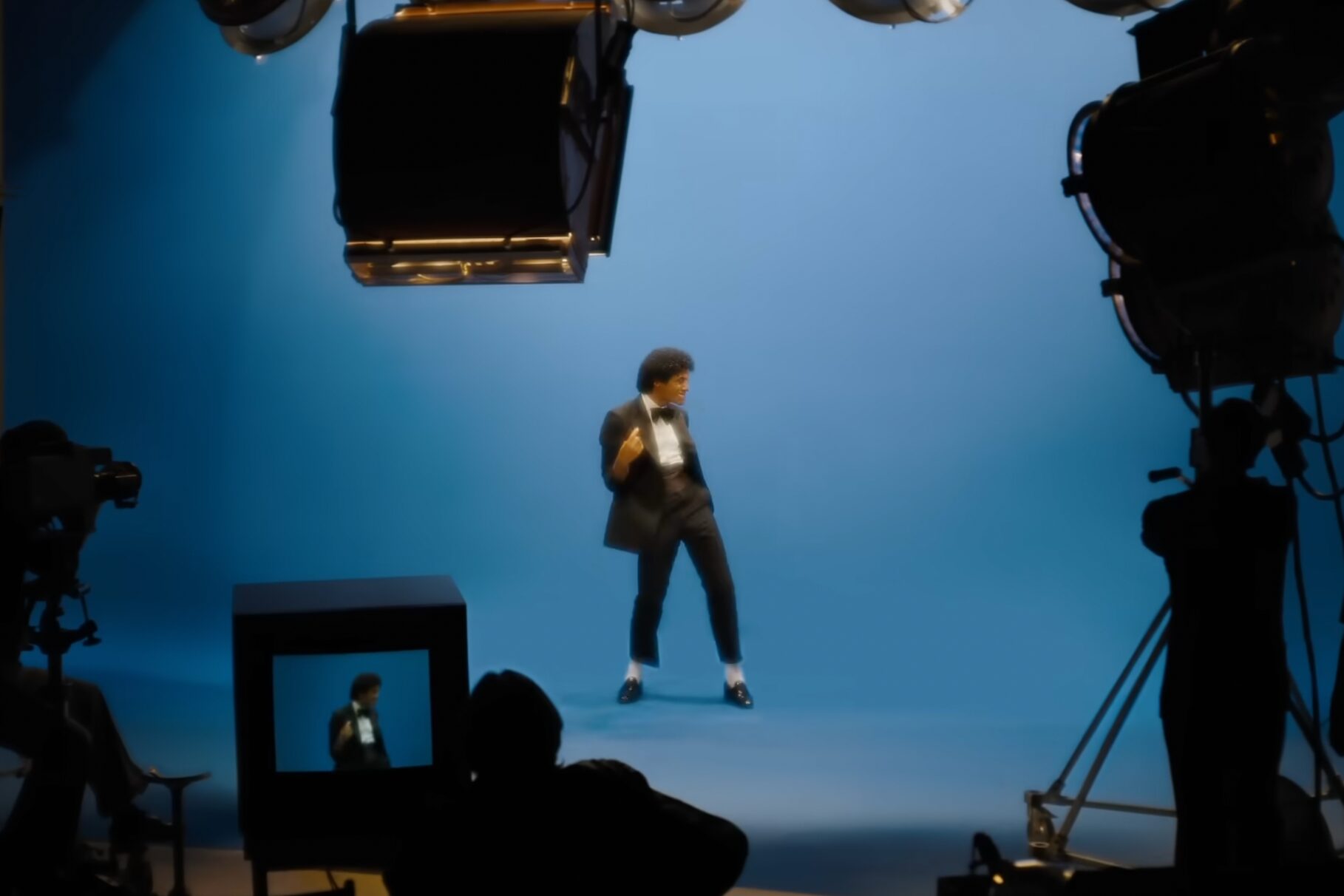
Here, the Jackson portrayal feels like a tribute act with a studio budget. The actor copies mannerisms but doesn’t inhabit the psyche. There’s no sense of isolation, of a boy forced into manhood under global scrutiny, of a man who built Neverland not just as a playground but as a fortress against a world that never let him be a child.
Narrative Structure: Checklist, Not Story
The film follows a familiar biopic arc: child star, breakout success, personal struggles, tragic decline. But it never evolves into a story with momentum, theme, or emotional payoff.
It’s structured like a Wikipedia timeline:
- 1964: Jackson 5 formed
- 1979: Off the Wall released
- 1982: Thriller becomes biggest-selling album ever
- 1993: Allegations surface
- 2009: Death
Each beat is checked off with ritual precision. But there’s no connective tissue. No lens through which to view Jackson’s life—no central question the film is trying to answer.
Was he a victim of fame? A pioneer who paid the price for innovation? A man shaped by abuse, both familial and systemic? The film never chooses. So we’re left with a sequence of events, not a narrative.
The Missing Perspective: Family, Collaborators, Culture
Any meaningful portrait of Michael Jackson must include the people who shaped him—and were shaped by him. Yet the film reduces key figures to caricatures or sidelines them completely.
- Joe Jackson appears as a one-dimensional tyrant, with no exploration of his influence on the Jackson 5’s work ethic or Michael’s lifelong need for approval.
- Quincy Jones is reduced to a smiling producer in the studio, never probed for insights into Jackson’s creative process.
- Diana Ross, a mentor and maternal figure, gets two scenes with no emotional depth.
- The fans—who adored him through every transformation—are shown only in concert footage, not as witnesses to his evolution.
Even the cultural context is missing. The film ignores how Jackson broke racial barriers on MTV, how his music videos redefined pop culture, and how his persona challenged norms of gender, race, and identity. These weren’t side effects of fame—they were central to his artistry.
Visual Style: Style Without Substance
The film is undeniably slick. The costumes are accurate. The sets are detailed. The dance sequences are choreographically precise.
But style without meaning is decoration.
Consider the scene recreating the 1983 Motown 25 performance of “Billie Jean.” The lighting, the camera angles, the crowd reaction—all faithfully reproduced. But the film doesn’t place this moment in context. It doesn’t explain how that single performance changed everything: how the moonwalk wasn’t just a move, but a statement of arrival, dominance, and reinvention.
Without that context, the scene is just a reenactment. It’s impressive, but inert.
The Estate’s Role: Censorship in the Name of Legacy

It’s an open secret that the Jackson estate had significant control over the film’s content. While estate involvement isn’t unusual—see the Whitney Houston and Amy Winehouse documentaries—the difference is in transparency.
Films like Whitney and Amy used archival footage, private recordings, and candid interviews to reveal painful truths. They didn’t shy away from addiction, mental health, or family dysfunction.
The Jackson biopic, by contrast, feels sanitized. There’s no home video footage of Michael as a child. No private audio. No critical voices from former staff, dancers, or associates. It’s as if the film was approved by committee to avoid anything that might “harm the brand.”
But legacy isn’t preserved by silence. It’s complicated, debated, and ultimately strengthened by honesty.
What a Better Biopic Would Have Done
A truly courageous Michael Jackson film could have taken several compelling approaches:
1. The Child Star Who Never Grew Up Focus on Michael’s arrested development—his desire to reclaim childhood, his relationships with young fans, his creation of Neverland as both sanctuary and prison.
2. The Artist as Innovator Trace how he redefined music videos, choreography, and album marketing. Show the creative process behind Thriller or Bad, not just the results.
3. The Man Behind the Mask Use a nonlinear structure to explore his changing identity—his skin, his surgeries, his voice—as metaphors for self-reinvention and alienation.
4. The Cultural Icon Examine his impact on race, fashion, and global pop—how he forced MTV to play Black artists, how his androgyny challenged gender norms, how his humanitarian songs reflected deep idealism.
Any of these angles would have offered depth. Instead, we get a greatest-hits reel with dialogue.
The Cost of Getting It Wrong
This isn’t just a failed film. It’s a missed opportunity to understand one of the most influential artists of the 20th century.
When biopics avoid complexity, they don’t protect legacies—they weaken them. They turn icons into cartoons, reducing human beings to a set of catchphrases and signature moves.
Future generations will watch this film and think: That’s Michael Jackson?
They’ll see the glove, the hat, the dance. But they won’t feel the ache behind “She’s Out of My Life,” the defiance in “They Don’t Care About Us,” or the longing in “Childhood.”
And that’s the real failure.
Conclusion: Biopics Must Dare to Be Human
The Michael Jackson movie had everything—access, talent, music, history. What it lacked was courage.
A biopic’s duty isn’t to flatter. It’s to illuminate. To confront. To ask hard questions, even when there are no easy answers.
Jackson deserved a film that grappled with his genius, his pain, his contradictions. Instead, we got a polished, soulless tribute that mistakes imitation for insight.
Next time, tell the whole story—not just the parts that sell tickets.
Frequently Asked Questions
Why is the Michael Jackson biopic considered a failure? Because it avoids emotional depth, ignores key controversies, and substitutes mimicry for true character study—failing the core mission of a biopic.
Does the film address the abuse allegations? Minimally. The movie references the 1993 and 2005 cases only in passing, without exploring their impact on Jackson or the cultural response.
Is the Jackson estate involved in the film? Yes, the estate had significant creative control, which many critics believe led to a sanitized, overly protective portrayal.
How does this film compare to other music biopics? Unlike Ray, Walk the Line, or Bohemian Rhapsody, it lacks narrative focus, character development, and honesty about its subject’s flaws.
Could a better Michael Jackson movie be made? Absolutely. A film that focuses on his artistry, trauma, cultural impact, or relationship with fame could be groundbreaking—if it’s willing to take risks.
Who would be a good director for a truthful Jackson biopic? Someone like Ava DuVernay, Barry Jenkins, or Steve McQueen—filmmakers who balance visual mastery with deep human insight.
What’s the biggest missed opportunity in the film? Not exploring Jackson’s internal world—his loneliness, creativity, and struggle for identity beyond the public persona.
FAQ
What should you look for in The Michael Jackson Movie Fails at the Basic Duty of a Biopic? Focus on relevance, practical value, and how well the solution matches real user intent.
Is The Michael Jackson Movie Fails at the Basic Duty of a Biopic suitable for beginners? That depends on the workflow, but a clear step-by-step approach usually makes it easier to start.
How do you compare options around The Michael Jackson Movie Fails at the Basic Duty of a Biopic? Compare features, trust signals, limitations, pricing, and ease of implementation.
What mistakes should you avoid? Avoid generic choices, weak validation, and decisions based only on marketing claims.
What is the next best step? Shortlist the most relevant options, validate them quickly, and refine from real-world results.